ServicesSell Without Repairs
Sell a House Without Repairs in Westland
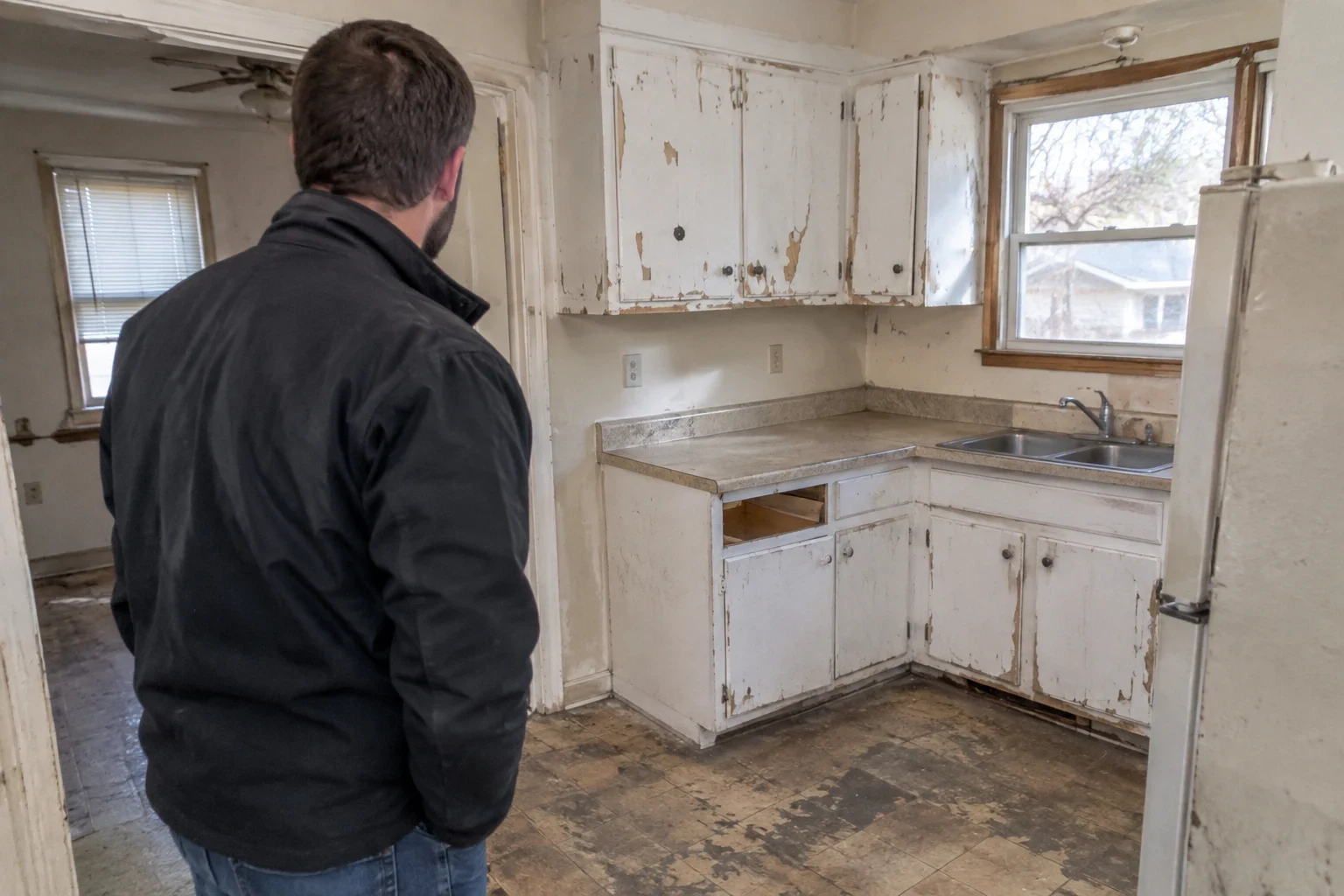
We buy the house in the condition it is in today. Cracked basement walls, an old fuse panel, an addition that never passed final inspection or a sewer line full of roots all become our job after closing. You skip the contractors, the inspection scramble and the cleanup.
What selling without repairs really means
On the open market, a buyer's inspection report turns into a repair list. Their lender's appraiser can also hold up the loan until certain items are fixed: peeling paint on older trim, a missing stair handrail, a furnace that will not fire. Open permits from past work can surface in the title or municipal search and stall a closing for weeks.
When you sell as-is to us, none of that lands on you. We price the house as it stands, with the cost of the work and the inspections already counted in the cash offer. After we own it, we file the paperwork with the building department, hire the trades and schedule the city inspections ourselves.
That matters for the 1950s through 1970s ranches and bi-levels common around Westland, where original wiring, clay sewer pipe and aging block foundations are typical. You do not need to fix them, document them or explain them to a string of buyers.
What we take off your plate
- 01
No repairs, no showings, no cleaning
You do not paint, patch, replace or tidy anything. We see the house once, on a walkthrough, and that is the last visitor you have to plan around.
- 02
Open permits from past projects
An open permit means work started under city approval but never passed its final inspection. We take the property with it still open and close it out, or redo the work to code, after the sale.
- 03
Work done without approval
A finished basement, an added half bath or a deck built without sign-off from the building department does not need to be torn out before you sell. We account for what it would take to bring that work up to code and buy the house anyway.
- 04
Belongings you leave behind
Take what you want and leave the rest. Old furniture, basement storage and garage contents stay with the house, and we arrange the haul-out.
- 05
Closing costs and fees
Every closing cost is ours to cover, and nothing hidden gets deducted at the table. The price in the purchase agreement is what you receive, less only any mortgage or liens already owed on the property.
Questions about Sell Without Repairs?
Call(734) 526-1427Signs selling as-is is the right call
A deal fell apart after inspection
If a past buyer walked away over the inspection report, the next one will likely read the same report. Selling to us skips that round entirely.
Fuse panel or ungrounded wiring
A 60-amp fuse box, two-prong outlets or cloth-wrapped wire often means a service upgrade. That work needs an electrical inspection from the city, and many buyers' insurers or lenders will not wait for it.
Sewer and drain trouble
Older clay tile laterals crack and let tree roots in, which shows up as basement floor drain backups. Replacing the line usually means excavation and a plumbing inspection.
Foundation movement
Horizontal cracks or an inward bow in a concrete block basement wall point to soil pressure from wet, frozen ground. Repairs often need an engineer's report before the city will sign off.
A code violation notice
Landlords who failed a rental inspection, or anyone holding a violation letter from the city, face deadlines for corrections. We can buy the property with the notice still open.
From the first call to closing day
- 1
Describe the condition by phone
Start with a call and give us whatever you know: the age of the roof, the type of electrical panel, where water gets in, and any city inspections left unfinished or violation letters on file. Best guesses are fine.
- 2
A walkthrough in person or on video
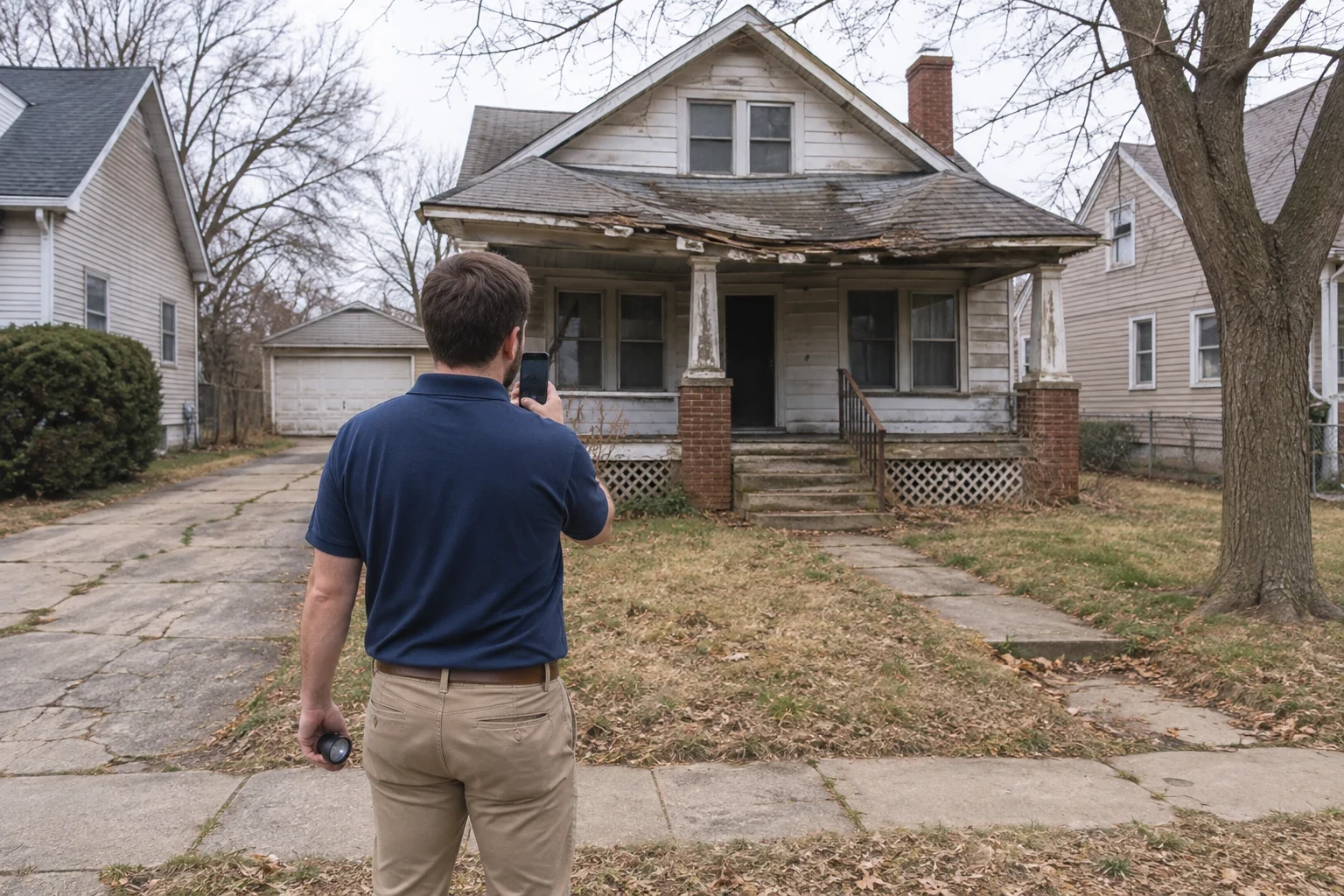
One of us visits, or you carry a phone through the rooms on a video call. We look at the basement walls, the electrical panel, the furnace and water heater, and the roof line, and we write down what we see so the offer is not built on guesswork.
- 3
An offer with the reasons attached
You get a competitive cash offer along with the items that moved it and why each one matters. If you think we got something wrong, say so and we will take a second look.
- 4
Closing on the date you choose
Set the closing anywhere from 10 to 60 days out. A title company draws up the deed and settlement statement, we cover the closing costs so they never come out of your proceeds, and you turn over the keys with the property left exactly as it is.
What shapes the number we offer
We start from what the house would sell for once fully repaired, then take away the cost of getting it there. The biggest swing is often not the damage you can see but the code work that follows it. We go over each factor with you instead of handing over one unexplained figure.
- Scope of work to meet code
- Replacing a roof is one job. Replacing a roof over rotted decking, with a second layer of shingles to tear off first, is a larger one.
- Inspections the work triggers
- Electrical service upgrades, sewer replacement, furnace swaps and structural repairs each need a permit and inspection. That adds fees and scheduling time to the work we take on.
- What is hidden underneath
- Water stains on a ceiling can mean a small roof leak or wet subflooring and moldy drywall behind it. Where we cannot see, we price the likely range honestly and tell you so.
- Size, layout and location
- Square footage, the number of bathrooms and lot size set the value after repairs. Comparable sales nearby, from Garden City to Canton, anchor that figure.
Questions about selling without repairs
Do I have to fix code violations before you buy?
No. We buy the house with the violations in place. Correcting them, pulling the permits and passing the inspections become our responsibility once the sale closes.
What if there is an open permit from an old project?
Tell us what you know about it, such as who did the work and roughly when. We look up its status with the city and factor the remaining inspection or corrective work into the offer. You do not need to call the contractor or the building department first.
Will a city inspection be required before closing?
Requirements differ from one Michigan city to the next, and some apply only to rentals. We check what applies to the address. Where the city allows the buyer to take on required corrections, we do, so you are not hiring trades to pass an inspection.
Do I still need to disclose problems?
Michigan sellers generally complete a seller disclosure statement, and honesty protects you. Tell us what you know. Nothing you disclose will surprise us or scare us off, since we expect older houses to need work.
Will you lowball me because of the repairs?
We show you how the offer was built: the value after repairs, the work and inspection costs we expect, and our margin. If a number looks wrong to you, we talk it through.
Leave the repair list behind
Give us a short call, describe the house and what is wrong with it, and we will put together a free cash offer. From there you set the closing anywhere from 10 to 60 days out.