What Devalues a Home the Most in Westland?
Some defects take a little off the price. A few drive away every buyer who needs a loan, and those are the ones worth understanding.
What devalues a home the most?
Structural problems devalue a house the most, especially foundation movement and the water damage that usually comes with it. Next come failing systems a lender won't finance around, like a worn-out roof, an unsafe electrical panel or a broken sewer line, plus unpermitted work an inspector flags. Cosmetic issues matter far less. Free cash offer: (734) 526-1427
Why do foundation and structural problems cost the most?
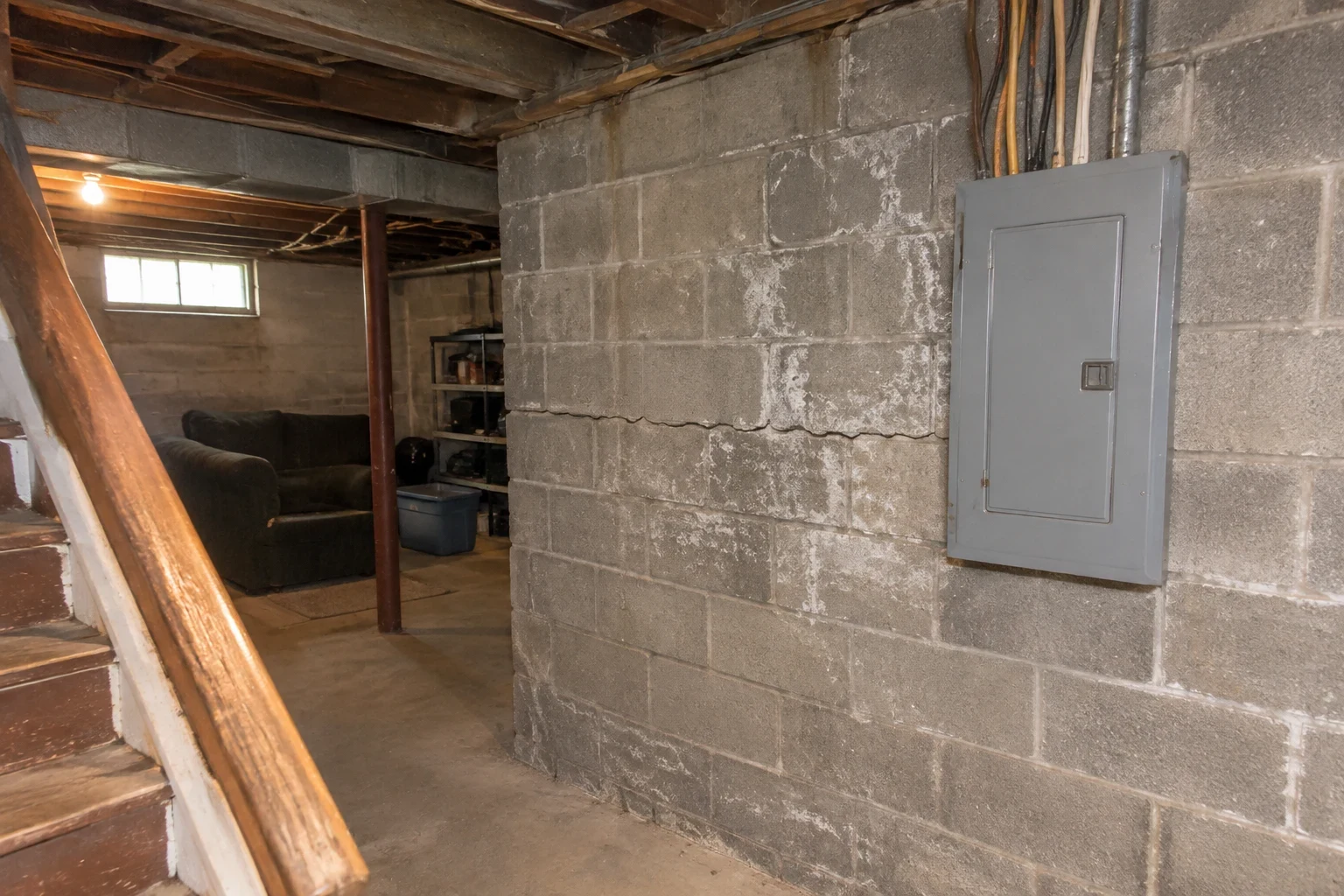
A buyer can repaint a room in a weekend. Nobody can easily fix a basement wall that is pushing inward, and every buyer knows it. Many houses around Westland sit on poured concrete or concrete block basement walls set in heavy clay soil. When that clay soaks up water and then freezes, it swells and presses on the walls. Block walls often answer with a horizontal crack along a mortar joint about halfway up, and over time the wall bows.
That kind of crack is very different from a thin vertical shrinkage crack in poured concrete, which is common and usually minor. A horizontal crack, a stair-step crack in block, or a wall that is out of plumb tells an inspector the structure is moving. The fix usually means a structural engineer's report, a building permit and work such as wall anchors, steel bracing or excavating and rebuilding the wall. Until that is done, many lenders will not approve a loan on the house, which removes most buyers from the pool.
Signs that a buyer's inspector will treat as structural:
- Horizontal or stair-step cracks in block basement walls
- Walls that bow inward or lean at the top
- Doors and windows upstairs that stick and drift out of square
- Sloping floors or a sagging center beam in the basement
- Gaps where the chimney pulls away from the siding
How much does water damage hurt value?
Water is the second big drain on value because it rarely stays one problem. A roof at the end of its life lets water into the attic sheathing and insulation. Clogged gutters and soil that slopes toward the house dump water against the foundation. Inside, that turns into efflorescence on the walls, rotted sill plates, warped subfloor and mold behind finished drywall.
The sewer lateral is the water problem many sellers never see. Older houses often have clay tile or cast iron lines running to the street, and tree roots work into the joints. A buyer's camera inspection that shows roots, a sag or a collapsed section can stall a sale, because replacing the line means digging up the yard and often the city right-of-way, under a permit.
Does unpermitted work or code trouble lower the price?
Yes, and it surprises people more than any other item. A finished basement, an added bathroom, a deck or a furnace swap done without permits can look fine and still be a liability. When an inspector or appraiser spots it, the buyer has to assume nothing behind the drywall was checked. Fixing it after the fact can mean applying for the permit late, opening walls so a city inspector can see the framing, wiring and plumbing, and correcting anything that does not meet current code.
Basements are the classic case. A bedroom down there needs an egress window of a minimum opening size so someone can get out in a fire, plus a smoke alarm. Without that, the room cannot honestly be counted as a bedroom, and the value drops accordingly.
Old electrical work raises the same concern. These items show up on inspection reports and make insurers and lenders cautious:
- Federal Pacific Stab-Lok or Zinsco panels, known for breakers that may fail to trip
- 60-amp service that cannot carry modern loads
- Ungrounded two-prong outlets, or three-prong outlets with no ground behind them
- Aluminum branch wiring from the late 1960s and 1970s
- Junction boxes left open or wiring spliced without a box
What matters less than most sellers think?
Dated kitchens, worn carpet, old paint colors and clutter cost far less than owners fear. Buyers price those as easy updates. An older furnace or water heater that still works is also a modest deduction, since buyers expect to replace them eventually. Some things do lower value but cannot be fixed at all, such as a lot that backs onto a busy road. Those are priced in by the market, not by an inspector.
What are your options if the big problems are already there?
You have three real paths. You can make the repairs, pull the permits and pass inspection before selling, which takes money and time and puts you in charge of contractors. You can sell on the open market and disclose the problems; Michigan's seller disclosure law requires most sellers to report known defects in writing, and buyers will negotiate hard or walk away once their own inspection confirms them. Or you can sell as-is to a cash buyer who does not depend on a lender.
That last path is what we do. We buy houses in Westland and nearby towns like Garden City, Wayne and Livonia with no repairs, no showings and no cleaning. Because we pay cash, a cracked wall or an unpermitted basement does not hold up a loan. We pay all closing costs, you won't pay hidden fees, and you choose any close date from 10 to 60 days. Our page on how to sell house without repairs explains the process step by step.
More questions about what lowers a house's value
- Do I have to fix unpermitted work before I sell?
- Not if you sell as-is to a cash buyer. If you sell to someone using a loan, the lender or the city may push you to permit the work or correct it before closing.
- Does an inherited house with problems still sell?
- Yes. Heirs often know little about a house's history, so we look at it as it stands and make an offer that already accounts for the condition. Our inherited property buying page covers how that works.
- Is a horizontal basement crack always a deal breaker?
- For loan-based buyers it often is until an engineer signs off on a repair. For a cash buyer it is simply part of the price.
- Will a cash offer account for every defect?
- We walk the property, note what we find and explain how the condition shaped the number, so you are not guessing about where it came from.
Get a cash offer that already counts the repairs
Tell us about the house, cracks, leaks, old wiring and all. We'll give you a free cash offer, and you pick the closing date.